
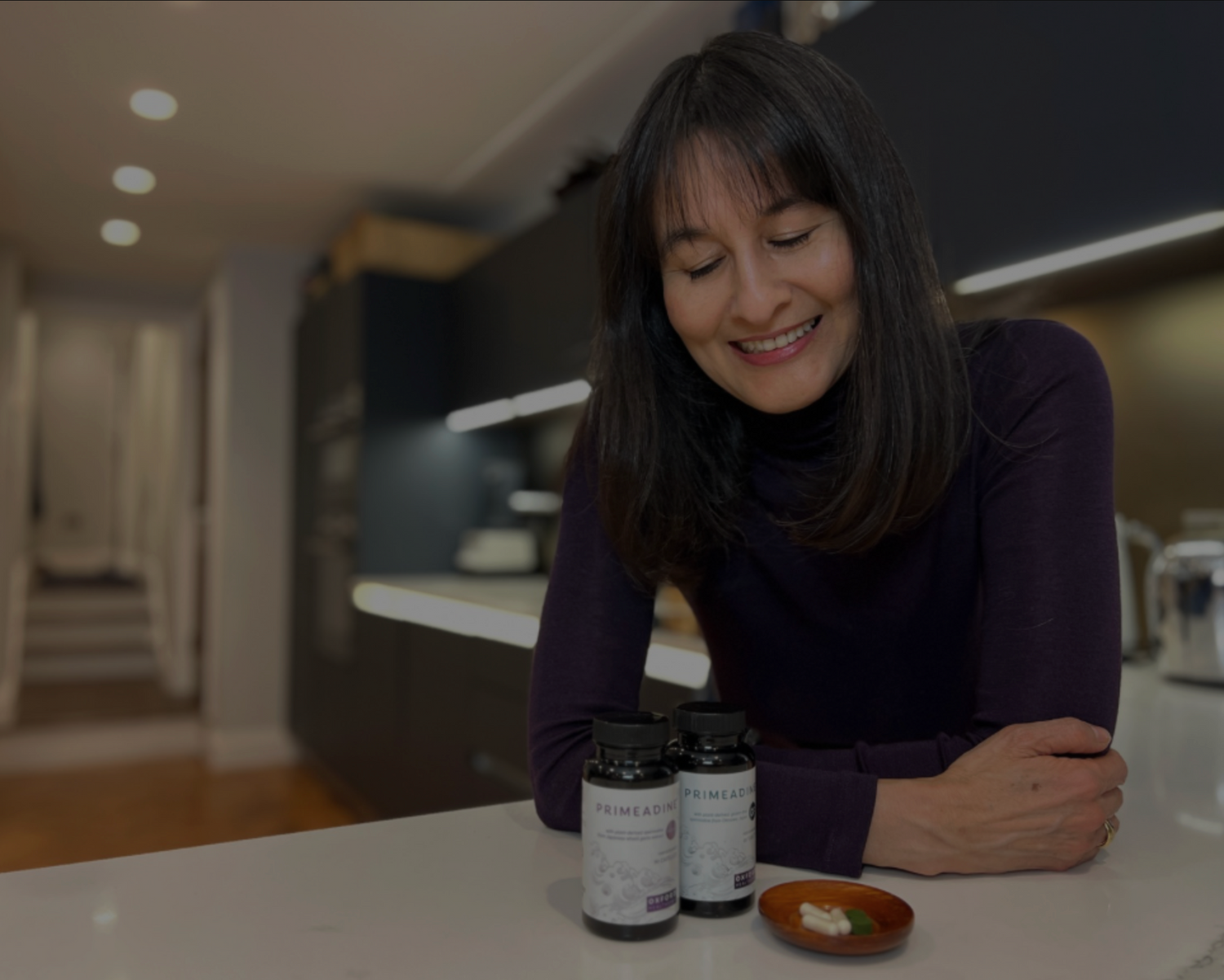
There is no such thing as a miracle supplement or a perfect stack for one person. Each person is so individual and what they need is likely different to me.
I say that as someone who has spent decades immersed in the science of aging, immunity, nutrition, and cellular health, and as someone who has lived her own version of the impossible. Diagnosed with autoimmune conditions in my late 30s, told I could not have children naturally, I eventually found my way back to health through a careful, considered approach to how I nourished and supported my body. I conceived naturally at 43. I am 60 years old with a biological age of 21.
None of that happened by chasing trends.
It happened through understanding how the body actually works, and giving it the conditions it needs to renew, repair, and flourish.
That is how I approach my supplement stack. Not as a collection of promises, but as a thoughtful ecosystem of support working in harmony with the body's own intelligence. And at the centre of it is whole-food spermidine.
Why Spermidine Comes First
If I could choose only one supplement to support how I age, it would be whole-food spermidine.
Not because it promises overnight transformation. Quite the opposite. I trust it because it works in partnership with one of the body's most fundamental biological processes: autophagy.
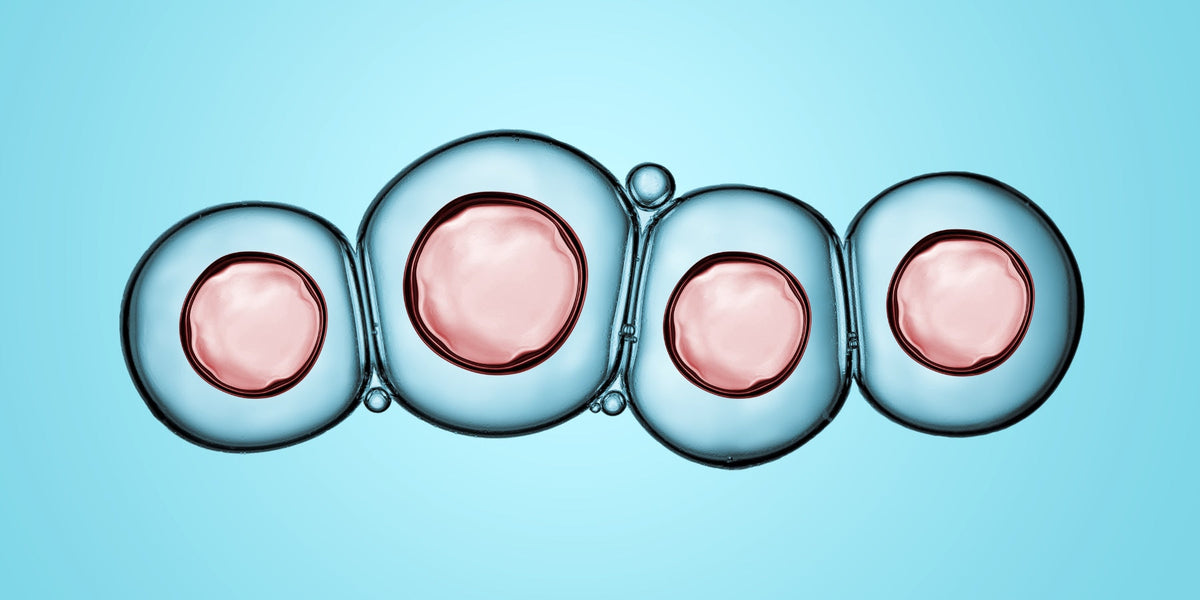
Autophagy is how our cells identify and clear damaged components, making space for healthier function. When we are younger, this process hums along efficiently. With age, stress, poor sleep, and modern living, it slows. Cellular debris accumulates. Repair becomes less reliable. Resilience quietly declines.
Spermidine is one of the most compelling longevity nutrients we currently know of for supporting this process, linked in research to cellular renewal, mitochondrial health, cognitive function, and healthy aging pathways.
Why Primeadine?
What makes Primeadine different is its whole-food approach. Rather than isolating compounds aggressively, it delivers a complete polyamine matrix in the form the body actually recognises and can use. For me, Primeadine is not about resisting aging. It is about helping the body maintain elegance at the cellular level. That distinction matters deeply.
NAD+ Support
For cellular energy and resilience
NAD+ is one of the most talked-about molecules in longevity science, and understandably so. It is involved in cellular energy production, DNA repair, mitochondrial function, and the activity of sirtuins — proteins closely linked to healthy aging pathways. We know NAD+ levels decline with age, and that has made this an exciting area of research.
I approach it with both curiosity and discernment.
The more important question is not simply "Can we raise NAD+?" but "Does that translate into meaningful, long-term benefit in humans?" The science is promising, and still evolving. For women interested in energy, metabolism, recovery, and cognitive vitality, NAD+ support is an intelligent area to explore — but it should sit within a complete longevity foundation, not replace one.
Primeadine supports cellular housekeeping through autophagy. NAD+ support speaks more to cellular energy. Both matter, and they are not the same thing.
Urolithin A
An area I'm watching closely
Urolithin A is one of the newer longevity nutrients I find genuinely interesting, though I don't currently take it as a daily part of my own stack.
It is a postbiotic compound produced when certain gut bacteria metabolise ellagitannins, found in pomegranates, walnuts, and some berries. What makes it compelling is its relationship with mitophagy — the body's process of clearing damaged mitochondria specifically.
Mitochondria influence energy, muscle function, metabolic health, cognition, and how well we recover. As we age, mitochondrial quality control becomes increasingly important. The clinical research around Urolithin A, particularly regarding muscle health and mitochondrial renewal, is meaningful and growing.
Since spermidine already supports mitophagy (autophagy in the mitochondria), it sits on my horizon rather than in my daily ritual. But it is worth knowing about.
NMN
Why I don't currently take it daily
NMN has received enormous attention in longevity circles, and I understand the fascination. It is a NAD+ precursor, and NAD+ is central to cellular energy, DNA repair, and healthy aging biology.
But I do not currently take NMN as part of my daily stack. Not because I dismiss it, but because I believe the human evidence still needs to mature, particularly around long-term use and meaningful clinical outcomes across different life stages. There has also been regulatory complexity in the NMN space that makes the category feel less settled than I would want for a supplement I personally recommend as a daily foundational practice.
Longevity is not about taking everything that generates enthusiasm. It is about choosing what is evidence-informed, biologically coherent, and sustainable over years – not months.
CoQ10
Why I don't currently take it
CoQ10 is one of the most widely recommended supplements in the longevity and cardiovascular health space, and the reasoning behind it is sound. It plays a central role in mitochondrial energy production and is a powerful antioxidant. Levels do decline with age, and for people taking statins — which deplete CoQ10 significantly — supplementation is often genuinely important.
So why don't I take it?
Partly because my current stack already supports mitochondrial function through other pathways — spermidine via autophagy, and the antioxidant protection I get from liposomal glutathione and astaxanthin. I am cautious about redundancy, and I prefer to keep my stack purposeful rather than comprehensive for its own sake.
I am also not on statins, which removes one of the most compelling clinical reasons to supplement CoQ10 specifically.
That said, I want to be clear: I do not dismiss it. For women with cardiovascular concerns, mitochondrial fatigue, or those taking statin medication, CoQ10 is a well-supported and reasonable addition. If you need to take it, I would recommend the one from Pure Encapsulations. The ubiquinol form tends to be better absorbed than standard ubiquinone, and that distinction is worth knowing if you do choose to take it.
It is simply not where I am right now. And in longevity, knowing what not to add is as important as knowing what to include.
The Rest of My Stack
Omega-3 fatty acids. Essential for cognitive function, cardiovascular health, healthy inflammatory balance, and cellular membrane integrity. Modern diets are often disproportionately inflammatory. Restoring that balance is as important as what we add.
Leslie uses a product from Norway which is only available there. Just ensure you choose an omega 3 supplement from small wild fish at the bottom of the food chain. Bare Biology is a good choice in the UK.
Magnesium Theonate (AM) & Glycinate (PM). Involved in hundreds of biochemical processes, and yet quietly depleted in so many women. Restoring magnesium often has a surprisingly profound effect on sleep quality, stress resilience, muscle recovery, and nervous system function.
I use Metagenics Magnesium Powder.
Vitamin D3 and K2. Vitamin D is technically a hormone precursor, and its influence extends far beyond immunity. I pair it with K2 because these nutrients work in concert — particularly in calcium regulation and cardiovascular support.
I use the one from Metagenics, formerly Nutriadvanced.
Creatine. This still surprises people, but the research around healthy aging in women is compelling. Creatine supports muscle preservation, brain energy metabolism, strength, and cognitive performance, particularly relevant during menopause and beyond. Muscle is one of the greatest predictors of longevity and independence as we age.
BHRT Support: NAC, DIM, and Calcium-D-Glucarate. Because I take bioidentical hormone replacement therapy, I consider these three supplements non-negotiable for me personally.
N-acetylcysteine (NAC) is a precursor to glutathione — the body's master antioxidant — and supports liver detoxification, immune resilience, and cellular protection. DIM (diindolylmethane), derived from cruciferous vegetables, supports healthy oestrogen metabolism, helping the body process and clear hormones efficiently. Calcium-D-Glucarate works in a complementary way, supporting the body's ability to eliminate used hormones and environmental toxins through the liver.
Together, they help ensure that the benefits of BHRT are not undermined by poor hormone clearance. For any woman on hormone therapy, these are worth a serious conversation with your practitioner.
Liposomal Glutathione and Astaxanthin. Glutathione is one of the body's most powerful antioxidants and detoxification molecules — but it is notoriously difficult to absorb in standard supplement form. The liposomal delivery method bypasses this challenge, allowing far greater bioavailability. I think of it as cellular protection from the inside out.
The brand I have taken consistently for the past few years is Altrient, which uses Setria and is made in the US. That said, there are over 100 supplement brands that incorporate Setria glutathione, so you have options depending on where you are in the world. A few I can speak to with confidence:
In the US, both The Vitamin Shoppe and GNC carry Setria-based products, as does Pure Encapsulations, which is a brand I respect for its quality standards. In the UK, Metagenics makes a good one that I have taken myself. And if you are based in South Africa, Coyne Healthcare also uses Setria in their glutathione products.
Astaxanthin is a carotenoid found naturally in certain marine algae and seafood, and one of the most potent antioxidants in nature. The research around its role in skin health, eye health, exercise recovery, and protection against oxidative stress is genuinely compelling. It is also one of the few antioxidants that crosses the blood-brain barrier — which, for cognitive longevity, matters.
Grass-Fed Collagen Peptides. Collagen is the structural protein that gives skin its elasticity, hair its strength, and joints their resilience. From our mid-30s, our natural collagen production begins to decline — and the effects become increasingly visible over time.
I use grass-fed collagen peptides daily, primarily for skin and hair health. The research supporting hydrolysed collagen peptides for skin elasticity and hydration is solid, and I find it one of the most tangible additions to my routine in terms of visible results. I add it to my morning drink and consider it one of the most pleasurable parts of my stack.
I use WillPowders Bovine Collagen Peptides Powder.
MCT Keto Creamer. MCTs — medium-chain triglycerides — are a form of fat that the body converts rapidly into ketones, providing clean, stable fuel for the brain. I add an MCT keto creamer to my morning routine as a way to support mental clarity, sustained energy, and metabolic flexibility without spiking blood sugar first thing in the day. It also helps extend the benefits of an overnight fast a little longer, which I find supports both my energy and my focus through the morning.
I also use WillPowders MCT Keto Creamer.
He Shou Wu (Fo-ti). He Shou Wu, known in traditional Chinese medicine as Fo-ti, is a herb with a long history of use in longevity and hair health practices. I take a very small amount — just one eighth of a teaspoon — and I cycle it carefully: three months on, one month off. This is important. He Shou Wu is a potent herb that requires respect and proper cycling; it is not something to take continuously or in large amounts without guidance.
My interest in it sits at the intersection of traditional longevity wisdom and my personal experience. I believe there is genuine intelligence in the practices that have been refined across centuries in cultures with exceptional longevity records. He Shou Wu is one I have chosen to explore thoughtfully, with appropriate caution and informed by both the traditional literature and emerging research.
As with anything at the frontier of longevity science, discernment is everything.
I would recommend working directly with a Chinese medical herbalist when taking Chinese medicine.
Protein. Not technically a supplement, but one of the most overlooked longevity essentials for women. Many of us in midlife are significantly under-consuming protein, particularly at breakfast. Without adequate protein, even a sophisticated longevity stack has limitations. The body needs raw materials in order to repair.
What I Don't Believe In
I do not believe in overwhelming the body with dozens of disconnected supplements. I do not believe longevity should feel obsessive, fear-driven, or expensive for the sake of it.
The most powerful longevity foundations are often deceptively simple: deep sleep, stable blood sugar, strength training, nervous system regulation, meaningful connection, and nutrient density. Supplements should support these foundations — not substitute for them.
What I love most about longevity science is the way it reframes aging. Not as decline. Not as something to resist. But as a relationship, a daily conversation between you and the future you are actively shaping.
Every nourishing meal, every restorative night of sleep, every capsule of Primeadine. Small acts, repeated consistently, quietly building something extraordinary.
That, to me, is the real promise of longevity.


Leave a comment
All comments are moderated before being published.
This site is protected by hCaptcha and the hCaptcha Privacy Policy and Terms of Service apply.