
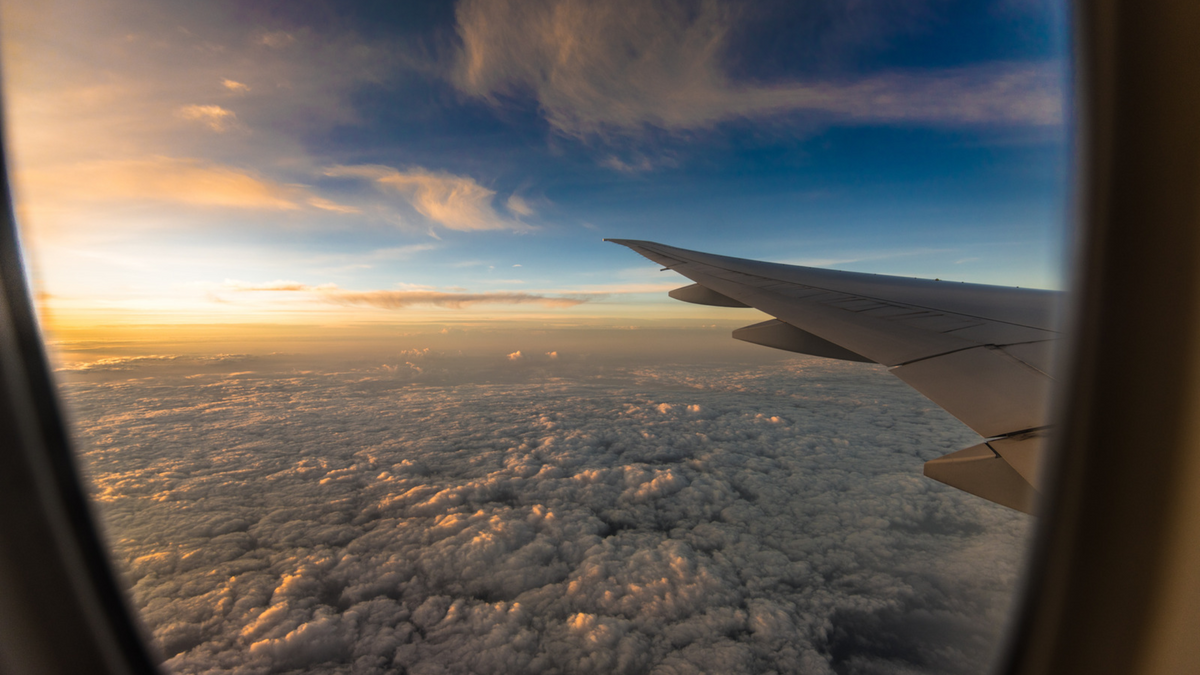
Anyone who has stepped off a long-haul flight knows the feeling. You are awake when you should be asleep, hungry at strange hours, and a little foggy for days. We tend to think of jet lag as tiredness, but it is really a timing problem. Every cell in your body keeps its own clock, and when you cross time zones, those clocks fall out of step with the world around you and with each other.
What is less well known is that the clockwork inside our cells is tied to our metabolism, and one of the molecules sitting at that crossroads is spermidine. It is a natural compound found in foods like soybeans, mushrooms, and aged cheese, and our levels of it tend to fall as we get older. The research connecting spermidine to the body clock is fascinating, and it offers a useful way to think about travel, timing and how we age.
What flying does to your body clock
Your master clock sits in the brain and takes its cue mainly from light. Clocks in your liver, gut and other organs listen to it, but they also take strong cues from when you eat. On a normal day these signals agree. After a long flight they don't, and it can take your whole system a while to catch up.
A large real-world study gives a sense of how long. Researchers working with Oura and the National University of Singapore looked at 1.5 million nights of sleep data from more than 57,000 travelers. Total sleep time recovered within a couple of days, but bedtimes and wake times were still misaligned 15 days later after long eastward trips. Flying east was the hardest direction, with later sleep, less deep and REM sleep, and more broken nights.
The disruption reaches beyond sleep, too. In a controlled study at the Universities of Surrey and Aberdeen, shifting people's bedtimes and mealtimes by five hours changed how they processed meals, including their blood sugar and fat levels and how quickly breakfast left the stomach. Interestingly, metabolism recovered faster than sleepiness and alertness did.
Where spermidine comes in
In 2015, a team led by Gad Asher at the Weizmann Institute of Science published a study in Cell Metabolism that linked polyamines, the family of molecules spermidine belongs to, directly to the circadian clock. They found the relationship runs both ways. The body clock and our feeding patterns govern the daily rhythm of the enzymes that make polyamines. In turn, polyamines help set the pace of the clock itself, by influencing how two core clock proteins, PER2 and CRY1, interact.
The age angle is what caught our attention. Older mice have lower polyamine levels and a slower-running clock. When the researchers blocked polyamine production in young mice, their clocks slowed by about 11 minutes a day. When they added spermidine to the drinking water of older mice, their clocks ran about eight minutes faster, closer to a youthful rhythm.
There is also a nice symmetry with autophagy, the cellular renewal process spermidine is best known for. Autophagy follows a daily rhythm of its own, rising and falling with our cycles of eating and fasting. Timing, it turns out, runs through all of it.
Primeadine GF – our gluten-free spermidine supplement – is specifically great for jet lag due to the combination of spermidine and nobiliten, both of which influence at least 2 of the CLOCK genes which modulate the circadian rhythm.
Helping your clock travel well
The most reliable tools for jet lag are still the simplest ones. Light is the strongest signal your brain's clock receives, so getting outside in morning daylight at your destination is one of the kindest things you can do for yourself, especially after flying east. Meal timing is the other big lever. Because the clocks in your organs take their cues from food, eating on local time from the first day helps bring them into line with your brain.
We like to think of spermidine as part of that everyday rhythm rather than a quick fix. If you are traveling, it is worth keeping the spermidine-rich foods you enjoy in your routine: some edamame, mushrooms or a piece of aged cheese. If you take Primeadine, the simplest approach is to first, take it before you go to sleep on the plane, and then before you go to sleep at your new destination.
More longevity habits that help your clock
Some of the habits we already lean on for healthy aging turn out to be useful travel companions too.
A short fast before you land. Your organs' clocks listen closely to food, and a fast seems to make them listen harder. In a 2008 study in Science, Clifford Saper and colleagues at Beth Israel Deaconess Medical Center found that mice have a feeding-based clock that can take over from the light-based one when food is scarce. Saper's suggestion was that about 16 hours without food, followed by a meal at local breakfast time, might help reset the body to the new day. This hasn't been tested directly in people, though an older "feast and fast" anti-jet-lag diet did reduce symptoms in a small trial of military personnel flying between the US and Korea. If you already practice time-restricted eating, skipping the airline meals and breaking your fast with a good breakfast on arrival is an easy experiment. It is not for everyone, so check with your doctor first if you have diabetes or any condition affected by fasting.
Move at the right time of day. Exercise is one of the most reliable things we can do for long-term health, and it also nudges the clock. A 2019 study in The Journal of Physiology had 101 younger and older adults do an hour of moderate treadmill exercise at different times of day. Exercising at 7am or between 1pm and 4pm shifted their body clocks earlier, while exercising between 7pm and 10pm shifted them later. After an eastward flight, a morning walk in daylight gives you light and movement together. After flying west, an evening workout may help you stay up a little later.
Melatonin, used thoughtfully. Melatonin is the hormone your body releases to signal night, and it is one of the best-studied jet lag aids. A Cochrane review found that taking it close to your target bedtime at the destination reduced jet lag after flights crossing five or more time zones, with the biggest benefit flying east. Timing matters, as taking it earlier in the day can make things worse. Melatonin is prescription-only in the UK, and it can interact with some medications, so it is a conversation to have with your doctor before you travel.
None of this will make a 12-hour time difference disappear. But looking after the rhythms that hold your body together, through light, food and rest, is one of the quieter ways we invest in aging well. Aging isn't something to resist. It is something to embrace, and that includes being gentle with yourself when you land.
References
- Zwighaft Z, et al. Circadian Clock Control by Polyamine Levels through a Mechanism that Declines with Age. Cell Metabolism, 2015.
- Weizmann Institute: news release on the polyamine study
- Sleep Review: polyamines and circadian rhythms in older mice
- Oura: how jet lag affects sleep
- ScienceDaily: how jetlag can disrupt our metabolism
- Youngstedt SD, et al. Human circadian phase-response curves for exercise. The Journal of Physiology, 2019.
- Herxheimer A, Petrie KJ. Melatonin for the prevention and treatment of jet lag. Cochrane Database of Systematic Reviews, 2002.
- Nature Clinical Practice: commentary on the feeding clock and the anti-jet-lag diet
- NBC News: skipping meals before a flight may fend off jet lag



Leave a comment
All comments are moderated before being published.
This site is protected by hCaptcha and the hCaptcha Privacy Policy and Terms of Service apply.