

Can you induce autophagy without fasting? Yes. While fasting is the best-known trigger, autophagy can also be supported through diet, exercise, quality sleep, and specific compounds. Spermidine, a naturally occurring polyamine, has been shown to induce autophagy, making it one option for people who want to support cellular renewal without prolonged fasting.
If you are searching for autophagy supplements, there is a good chance you already know what autophagy (pronounced "aw-TAW-fuh-gee") is. But in case you do not, here is a simple reminder: it is the body's way of recycling its own cellular waste.
Because it is a vital bodily process with wide-ranging benefits for the body and mind, it makes sense to support autophagy naturally wherever we can.
For those familiar with this process of cellular renewal, there are several lifestyle interventions that can help induce autophagy, such as following a ketogenic diet, doing high-intensity exercise, and getting deep, restorative sleep. There are also more advanced techniques that can be used less regularly but that may bring the autophagy benefits many people are looking for, such as intermittent fasting, hyperbaric oxygen chambers, and hot and cold therapy.
Anyone who has tried these interventions and techniques knows they can be difficult to implement and sustain in the middle of a busy life. So that raises the question: are there autophagy supplements that can help the body induce autophagy without fasting? And if there are, do they actually work, and are they genuinely low-effort?
Autophagy Supplements and Foods of the Past
Several foods and compounds have long been associated with autophagy. The evidence behind them varies widely: some are supported by research, while others rest on limited or preliminary data, so their effects are best viewed with appropriate caution.
Foods and compounds that have been proposed to support autophagy include:
- Coffee
- Green tea
- Turmeric
- Ginger
- Mushrooms such as chaga and reishi
- Berberine
- Bergamot
- Resveratrol
While some of these have research behind them, others do not. So to give yourself the best chance of supporting autophagy, it is worth looking at the autophagy compounds emerging from world-class science.
Autophagy Supplements and Foods of the Future
Spermidine is among the most studied autophagy-inducing compounds. A naturally occurring polyamine found in foods like wheat germ and aged cheese, it has been shown to induce autophagy in research settings, and scientists continue to investigate its role in cellular renewal and healthy aging.
One supplement that increases autophagy, yet has received relatively little public attention despite being increasingly studied by world-leading scientists, is spermidine.
Named after the source in which it was first discovered (hint: sperm), spermidine is one of a family of molecules known as polyamines. It is one of the most studied polyamines to date and has been shown to induce autophagy [1].
Spermidine can be found in many foods, such as aged cheeses and wheat germ. However, our modern reliance on processed foods makes it difficult to include these regularly, and in the right amounts.
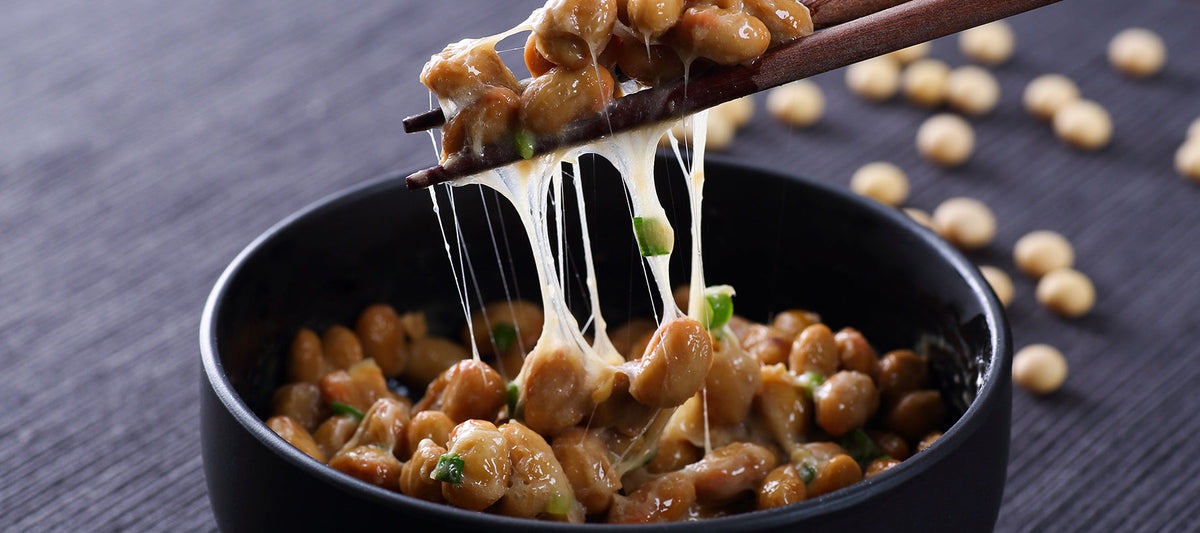
If you were to incorporate one spermidine-rich food into your diet every day, you might do what the long-lived Okinawans do and eat their local version of natto, a Japanese delicacy of long-fermented soybeans that has one of the highest spermidine contents by weight. This longevity-supporting food is fermented for a year in limestone caves, a well-kept Japanese healthy-aging tradition.
Unfortunately, natto is not only hard to make and hard to find, it also has a distinctive smell, texture, and taste that can put off even the most dedicated longevity enthusiasts.
So realistically, how many of us are in a position to easily buy and eat natto? For most people, the answer is: very few.
Spermidine Supplements and Autophagy
Spermidine supplements offer a practical way to increase daily intake without relying on hard-to-source foods. This is where a food-derived spermidine supplement like Primeadine® comes in: a consistent, measured way to support autophagy for those who want cellular renewal without fasting or other labor-intensive interventions, as well as for those who already do those things and want to further support autophagy in their cells.
Autophagy Explained: A Recap
Autophagy is the body's cellular recycling process. It clears out damaged or unnecessary cell components and reuses them, helping cells function and renew. Autophagy naturally declines with age, which is one reason many people look for dietary and lifestyle ways to support it.
For anyone less familiar with this process of cellular renewal, here is a short recap.
Professor Katja Simon, a leading Oxford University scientist who studies autophagy, describes it this way:
"The recycling van that delivers the rubbish to the recycling centre. It is very important to degrade toxic waste for the survival of the cell, and a cell without autophagy cannot survive."
In short, autophagy involves the body clearing out damaged cell components and regenerating healthy ones.
Research by Simon and others has made it clear that autophagy is a fundamental process operating at the cellular level, with effects felt throughout the body.
It is no surprise, then, that Yoshinori Ohsumi, the Japanese scientist who elucidated the mechanisms of autophagy, won the Nobel Prize in Physiology or Medicine for his work. His research showed that this process of cellular recycling and renewal plays a key role in human health. Scientists continue to study autophagy's role in healthy aging, which is why supporting healthy autophagy levels is an area of active interest.
This article is for educational purposes only and is not intended as medical advice. It is not intended to diagnose, treat, cure, or prevent any disease. Speak with a qualified healthcare professional before starting any new supplement, particularly if you are pregnant, nursing, taking medication, or managing a health condition.
Age well with Primeadine®
Primeadine® is a food-derived spermidine supplement made from Japanese wheat germ. It is gluten-free, glyphosate-free, and third-party tested for purity. Rather than asking you to track down hard-to-source foods, Primeadine offers a clean, consistent daily dose to support autophagy, cellular renewal, and healthy aging. Explore Primeadine and the Oxford Healthspan range.
References
- Madeo F, Bauer MA, Carmona-Gutierrez D, Kroemer G. Spermidine: a physiological autophagy inducer acting as an anti-aging vitamin in humans? Autophagy. 2019 Jan;15(1):165-168. doi: 10.1080/15548627.2018.1530929. Epub 2018 Oct 11. PMID: 30306826; PMCID: PMC6287690.



Leave a comment
All comments are moderated before being published.
This site is protected by hCaptcha and the hCaptcha Privacy Policy and Terms of Service apply.