
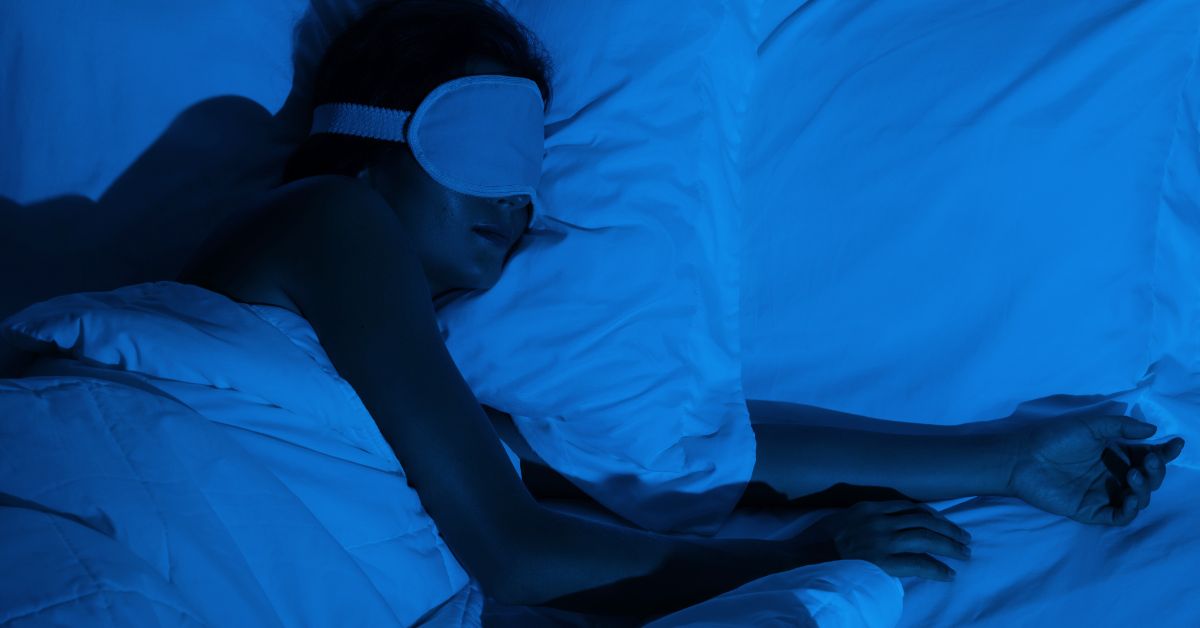
There is a particular kind of cultural guilt that surrounds sleep. The glorification of early mornings, packed schedules, and relentless productivity has long positioned rest as something to be minimized. Science is pushing back on that narrative with increasing force. Diet, exercise, stress management – the pillars of healthy longevity – are well-rehearsed, but this peer-reviewed study published in Sleep Advances argues that sleep belongs at the very top of that list [1].
Key findings
Researchers at Oregon Health & Science University analyzed US health survey data spanning 2019 to 2025, examining how various lifestyle factors correlated with life expectancy. They looked at sleep duration alongside physical activity, diet, employment, educational level, and other variables.
Insufficient sleep, defined as fewer than seven hours per night, had a stronger association with lower life expectancy than physical inactivity or poor diet. Of all lifestyle factors studied, only smoking showed a stronger link. The association held even after controlling for other confounding variables.
"I didn't expect insufficient sleep to be so strongly correlated to life expectancy," said OHSU sleep physiologist Andrew McHill. "We've always thought sleep is important, but this research really drives that point home."
What the research can and cannot tell us
It would be an overstatement to say this study proves that sleeping fewer than seven hours causes early death. Given it's an observational study, it establishes association, and not necessarily causation. Survey-based data also carries inherent limitations, including reliance on self-reported sleep duration. The intricate interplay between sleep, diet, and exercise cannot be neatly separated in a study of this kind.
What it does offer, however, is a consistent, meaningful signal across multiple analytical models. Sleep deserves a more prominent place in how we think about longevity, at the very least on par with diet and exercise.
Quality Matters
Seven to nine hours, consistently, is the target for duration. The American Academy of Sleep Medicine and the Sleep Research Society are aligned on this, as are the OHSU researchers themselves. But quantity alone tells only part of the story.
Sleep is not a single, uniform state. It moves in cycles of roughly 90 minutes, each passing through lighter stages, REM sleep, and the slow-wave deep sleep that is arguably the most biologically valuable of all. This is an active biological process, not passive rest. During slow-wave sleep, growth hormone is released, cellular repair is initiated, and autophagy, your cells' intrinsic process of clearing damaged components and recycling cellular material, peaks. The brain's glymphatic system flushes the metabolic waste that accumulates during waking hours. REM sleep, meanwhile, plays a critical role in memory consolidation, emotional regulation, and cognitive resilience. The hormonal landscape shifts. Inflammation is modulated. Everything you do while awake depends on what your body does while you sleep.
A night of fragmented or shallow sleep, even one that clocks eight hours on a tracker, does not deliver the same renewal as one spent moving fully and repeatedly through these cycles. Alcohol, late-night eating, elevated cortisol, and screen exposure before bed are among the most common disruptors of sleep architecture, shifting the body away from the deeper stages where so much of the real work happens. Poor sleep quality has also been associated with increased risk of obesity, type 2 diabetes, impaired immune function, and cardiovascular strain, all factors that compound over time and matter deeply to anyone invested in aging vibrantly.
The goal is not simply to spend more hours in bed, but to protect the conditions that allow sleep to be genuinely restorative.
What this means practically
We know that this isn't as simple as it sounds. Caregiving responsibilities, work demands, hormonal shifts, and stress all exert real pressure on sleep quality and duration, as many navigating midlife know intimately. Small, evidence-informed shifts can help: limiting screens before bed, a consistent wind-down ritual, morning light exposure, and attention to caffeine timing. Individual responses vary, but the direction of the evidence is consistent.
The invitation here is not to add sleep to a growing list of things to optimize. It is to reframe it as a genuine act of nourishment. When your cells are given the conditions to truly renew, everything else you do, every supplement, every healthy choice, works harder for you.
Nourish your sleep. Nourish your cells. Let your body do what it was designed to do.
This article references a peer-reviewed observational study. As with all observational research, findings reflect association rather than proven causation. This content is for educational purposes only and does not constitute medical advice. Please consult your healthcare provider with questions about your health.
References:
[1] Kathryn E McAuliffe, Madeline R Wary, Gemma V Pleas, Kiziah E S Pugmire, Courtney Lysiak, Nathan F Dieckmann, Brooke M Shafer, Andrew W McHill, Sleep insufficiency and life expectancy at the state-county level in the United States, 2019–2025, SLEEP Advances, Volume 6, Issue 4, 2025, zpaf090, https://doi.org/10.1093/sleepadvances/zpaf090




Leave a comment
All comments are moderated before being published.
This site is protected by hCaptcha and the hCaptcha Privacy Policy and Terms of Service apply.