
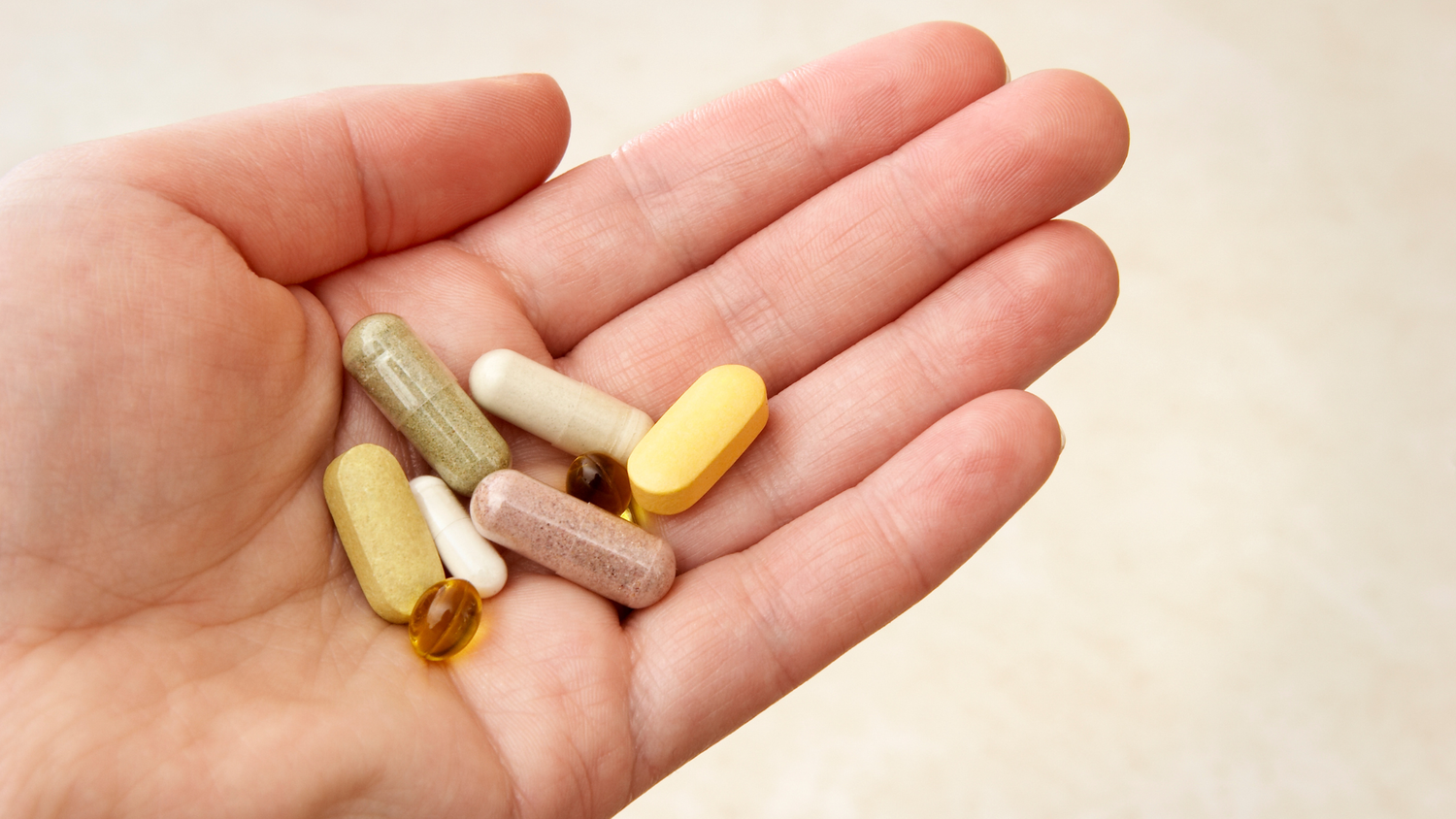
If you've ever scanned a supplement label and paused at the word "maltodextrin," you're not alone. For the discerning, ingredient-conscious individual who knows their way around a nutrition panel, it's a word that can give pause. Associated with ultra-processed foods, blood sugar spikes, and cheap fillers, maltodextrin has earned a complicated reputation. So let's talk about it honestly.
Because what's in Primeadine is not what you're imagining.
The ingredient in question
Primeadine Original contains a small amount of highly branched cyclic dextrin (HBCD), derived from corn. In scientific literature, it is technically classified as a novel form of maltodextrin. So yes, the label is accurate. But the similarity to conventional maltodextrin ends there, much like calling extra virgin olive oil "vegetable oil." Technically true. Entirely misleading.
Why this is fundamentally different
Regular maltodextrin, the kind found in processed snacks and cheap supplements, has a glycemic index of around 85 to 105. It is rapidly absorbed, spikes blood sugar, and offers little in the way of functional benefit.
Highly branched cyclic dextrin has a glycemic index of approximately 32. Lower than oats. Lower than brown rice. Lower than most fruits. It is specifically engineered for slow, sustained energy release, designed to move through the stomach quickly and absorb gradually, without the glucose surge that conventional maltodextrin produces. It is the form used in precision sports nutrition for exactly this reason.
It is a low-GI carbohydrate used for its role in sustained, stable energy delivery. The choice in Primeadine Original's formulation reflects what that formulation is designed to achieve: clean, steady cellular support without metabolic disruption or digestive complaints.
Metabolically, it behaves nothing like corn syrup or high-fructose corn syrup, the associations that make most of us instinctively wary of anything corn-derived.
What about the amount?
This is where context matters enormously. Athletes using highly branched cyclic dextrin for performance typically consume 25 to 50 grams per serving. The trace amount present in Primeadine is well under 100 milligrams per serving. The actual glucose load is, in functional terms, zero. You would get a more significant blood sugar response from a single cherry tomato.
The bottom line
Every ingredient in Primeadine is chosen with care and justified by science. When you see "maltodextrin" on the label, you are looking at a highly specialized, low-GI compound present in trace amounts, in a form your body handles with ease. It is not a filler. It is not a shortcut. It is a considered formulation decision, made with the same integrity that guides everything Oxford Healthspan does.




Leave a comment
All comments are moderated before being published.
This site is protected by hCaptcha and the hCaptcha Privacy Policy and Terms of Service apply.