
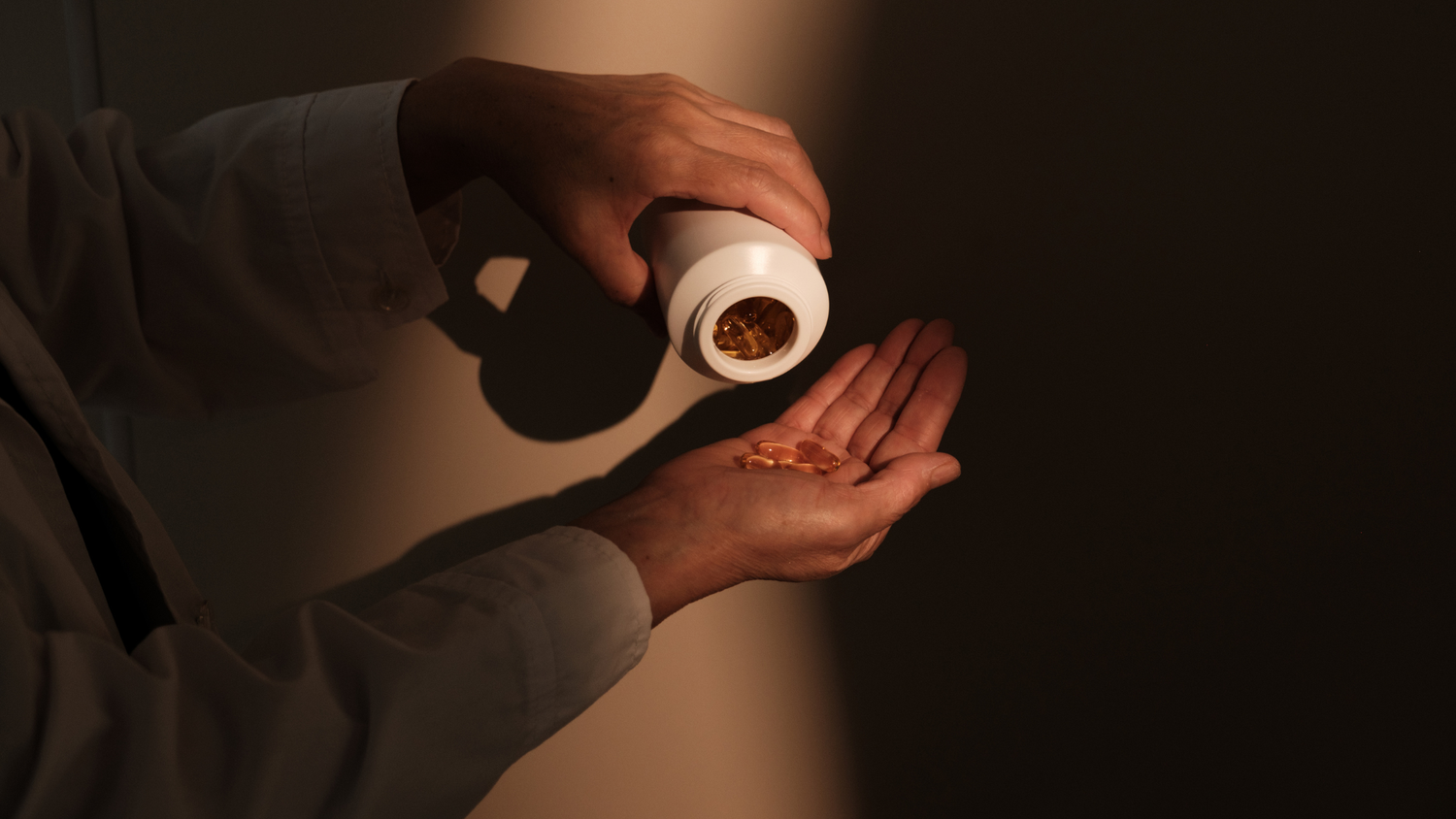
A guide to dosage, what the research says, and why most labels are telling you less than half the story
If you've been researching spermidine for more than ten minutes, you've probably hit a wall of contradictory numbers. One brand claims 10mg per serving. Another leads with 800mg. A third talks about "optimal cellular doses" without specifying what that actually means in practice. And somewhere underneath all of it, you're trying to answer a deceptively simple question: how much do I actually need?
It's a smart question. And the fact that it doesn't have a universally agreed-upon answer tells you something important about where this science sits right now — and why being a discerning consumer in this category requires a different kind of literacy.
Let's illuminate what we know.
What Spermidine Does (and Why Dose Matters)
Spermidine is a naturally occurring polyamine — a compound found in every living cell in your body, and in many of the foods you eat: wheat germ, aged cheeses, mushrooms, legumes, and certain fermented foods. It isn't a synthetic invention or a pharmaceutical novelty. It is something your body already produces and recognizes.
Its most celebrated function is autophagy, a word derived from the Greek for "self-eating", though the reality is far more elegant than that sounds. Autophagy is your cells' built-in renewal process: a sophisticated system that identifies and clears damaged proteins, dysfunctional organelles, and cellular debris, then uses that material to nourish and rebuild. Think of it as a deep, intelligent cleanse at the cellular level.
The problem is that as we age, spermidine production in the body naturally declines. Autophagy slows with it. The cellular housekeeping that once happened efficiently and continuously begins to fall behind. Research suggests this decline plays a part in many of the key pathways of aging (known as the Hallmarks of Aging by scientists): inflammation or inflammaging, telomere shortening, stem cell and mitochondrial dysfunction, and gut dysbiosis, to name a few.
Replenishing spermidine through diet and supplementation is, in essence, a way of sending the signal to your cells to keep doing what they're brilliantly designed to do.
But here's where dose enters the conversation in a meaningful way: the signal has to be strong enough to be heard.
What the Research Tells Us About Effective Dosage
The landmark studies on spermidine and longevity have used relatively modest doses by supplement industry standards, typically 1mg of wheat germ-derived spermidine daily. Research published in the journal Nature Medicine examined the relationship between dietary spermidine intake and cognitive aging, finding associations at intake levels achievable through both diet and whole-food supplementation.
What those studies did not use was isolated synthetic spermidine at doses of 6mg or higher, which is the safe upper limit according to European safety standards. That research does not exist yet in humans at scale, which means brands making claims on the back of megadose synthetic products are, at minimum, getting ahead of the evidence.
The more nuanced point is this: effective dosage isn't simply about the number on the label. It's about how much of that spermidine the body can actually absorb and put to work: a property called bioavailability. And bioavailability is deeply influenced by source.
The Bioavailability Question: Why Source Changes Everything
When spermidine arrives in the body from a whole-food source, it comes embedded within a natural matrix of cofactors, complementary polyamines (putrescine and spermine), and food-derived compounds that the body has co-evolved to absorb. This is the context in which spermidine appears in wheat germ, in soybeans, in the fermented foods that have nourished human longevity cultures for generations.
When spermidine is synthesized in a laboratory and delivered in isolation at high concentrations, the body encounters something structurally identical but contextually foreign. The molecule is the same. The conversation it starts with your digestive system is different.
This distinction matters profoundly when evaluating dose. A lower milligram amount of food-derived, highly bioavailable spermidine may deliver more effective cellular support than a much higher dose of synthetic or synthetically enriched spermidine that the body absorbs less efficiently. Higher numbers don't automatically translate to greater vitality. Quality of signal matters as much as strength of signal.
The Label Problem: Wheat Germ Dose vs. Spermidine Dose
This is where the supplement industry's clarity problem becomes impossible to ignore.
If you've compared spermidine products and wondered how some brands can claim 700mg, 800mg, or more per serving, the answer is usually this: they're measuring the wrong thing. That large number almost always refers to the total weight of the wheat germ extract in the capsule, not the spermidine content within it.
These are categorically not the same figure.
Wheat germ is a food. It contains spermidine, but spermidine is only a fraction of what wheat germ is. Even a concentrated wheat germ extract with excellent spermidine content will yield actual spermidine doses measured in single-digit milligrams, not hundreds. A product listing "wheat germ extract 700mg" on its label and allowing that number to imply a spermidine dose is engaged in a sleight of hand that does a disservice to every customer who trusts it.
Some brands go further still, artificially enriching a wheat germ base with isolated, often synthetic spermidine to boost the number, then marketing the result as a "natural" product. Technically, wheat germ is present. What has been added to it, and in what form, is rarely stated clearly.
The number that matters — the only one with scientific relevance — is the milligrams of spermidine per serving, verified through independent third-party testing, batch by batch. Everything else is packaging.
So What Is the Right Dose?
There is no single universally agreed clinical dose for supplemental spermidine. The field is still maturing, and human trial data continues to accumulate.
The goal of supplementation is not to flood the body with an unfamiliar compound at industrial scale. It is to meaningfully and consistently support your body's natural spermidine levels in a form it recognizes and can use, sustaining the cellular renewal pathways that your vitality depends on.
This is precisely why a modest but verified, food-derived, bioavailable dose is not a compromise. It is the point.
Reading Labels Like a Scientist
Before you invest in any spermidine supplement, ask three questions:
Is the dose stated in mg of spermidine, or mg of extract? A brand confident in its product will state the spermidine content clearly. If all you can find is a large extract weight with no breakdown of actual spermidine, that's not an accident.
What is the source, and has it been independently verified? Whole-food derived from a traceable, tested source is a meaningful standard. Third-party batch testing closes the gap between what a label claims and what is actually in the capsule.
Does the dose align with the science? If a brand is claiming doses ten or twenty times higher than the levels studied in clinical research, ask what evidence supports those claims specifically. Enthusiasm is not evidence.
How Primeadine Approaches Dose
Primeadine is whole-food derived from Japan, sourced with the same rigor applied to every element of its formulation. The spermidine content per serving is clearly stated, independently tested, and calibrated to the research rather than the marketing race for the largest number on the label.
Primeadine Original is sourced from glyphosate-free wheat germ exrtract. Primeadine GF, for those who need a certified gluten-free option, is derived from a distinct chlorella source grown in Okinawa, one of the world's most storied longevity regions.
What Primeadine does not do is inflate a wheat germ extract weight and call it a spermidine dose. The integrity of the number is, to us, inseparable from the integrity of the product.
The Bottom Line
Spermidine dosage is not a simple numbers game. It's a conversation between source, bioavailability, research alignment, and label transparency.
The right dose of spermidine is one that is clearly stated, honestly derived, scientifically grounded, and consistently delivered. When you find a brand that meets all four of those standards, you've found something worth keeping.




Leave a comment
All comments are moderated before being published.
This site is protected by hCaptcha and the hCaptcha Privacy Policy and Terms of Service apply.